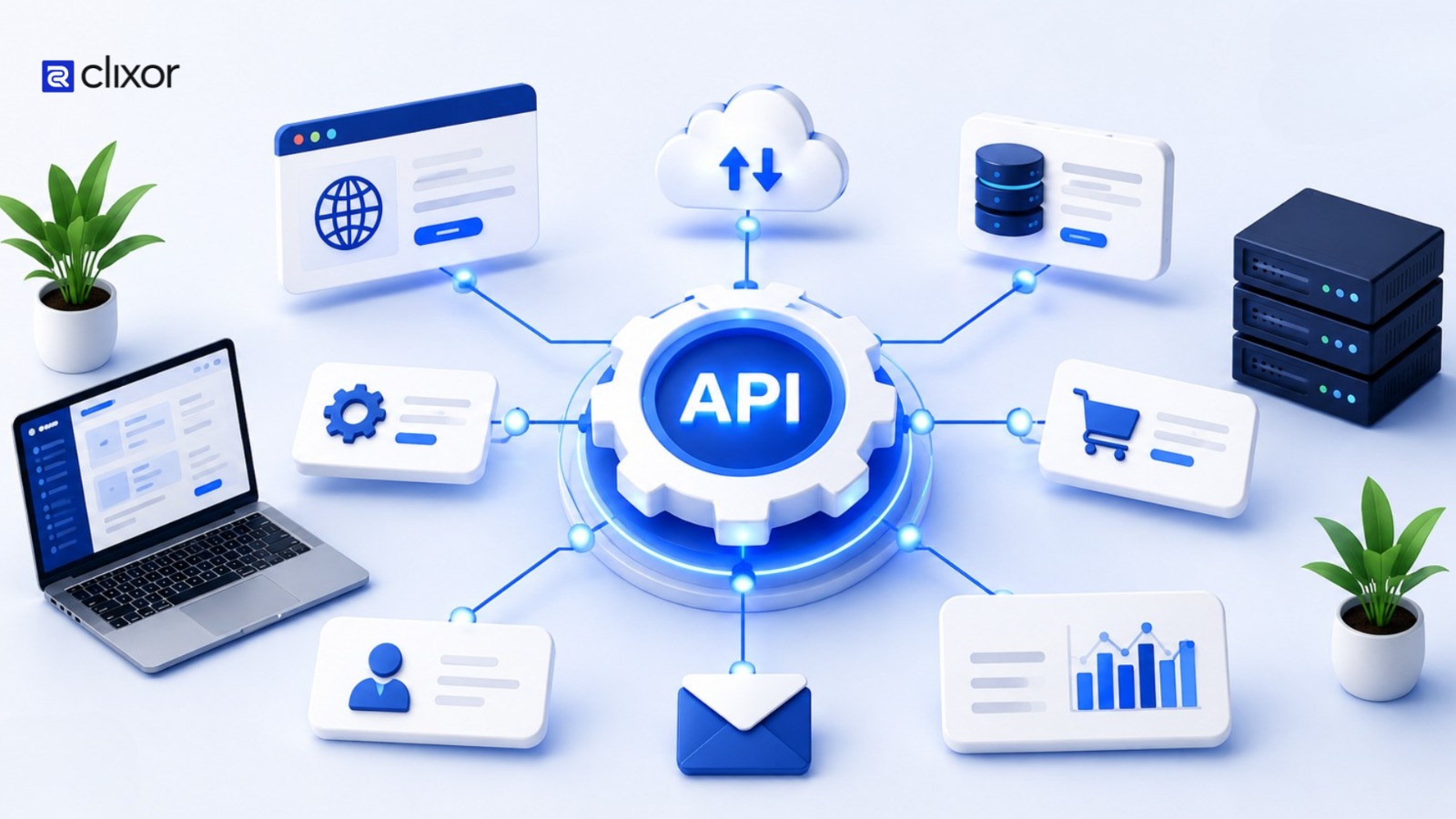
How API Integration Helps Businesses Connect Their Digital Systems
Modern businesses often use multiple digital tools to manage daily operations. A website may handle customer enquiries, a CRM may store customer information, and an accounting or payment system may manage transactions. When these systems do not communicate properly, teams may have to enter the same information manually in different places.
API integration helps solve this problem by allowing different software systems to communicate and exchange data. As a result, business processes can become more connected, efficient, and easier to manage.
- What Is API Integration?
- How API Integration Helps Businesses
- Reduce Manual Data Entry
- Improve Business Workflows
- Connect Customer Data Across Platforms
- Support Business Growth
- Improve Customer Experience
- API Integration Requires Proper Planning
- Common API Integration Examples
- Conclusion
What Is API Integration?
API stands for Application Programming Interface. An API provides a way for two or more software applications to communicate with each other.
For example, when a customer submits a form on a business website, an API can send that information directly to the company's CRM. Instead of an employee manually copying the details, systems can automatically exchange the required data.
API integration can connect websites, mobile applications, CRMs, payment systems, analytics platforms, booking tools, and other business software.
How API Integration Helps Businesses
The main benefit of API integration is that it connects systems that would otherwise work separately. This can reduce repetitive work and help information move more efficiently between applications.
For example, an online business may connect its website with a payment gateway. When a customer completes a payment, the website can receive the payment status and update the relevant order information.
Businesses can use APIs to connect:
- Websites and CRM systems
- Payment gateways and online stores
- Booking systems and calendars
- Marketing platforms and customer databases
- Business applications and analytics tools
- E-commerce platforms and inventory systems
Reduce Manual Data Entry
Manual data entry can be time-consuming and may lead to errors when the same information must be entered multiple times.
With API integration, information can move automatically between connected systems.
For example, when a customer submits an enquiry through a website, the details can be transferred directly to a CRM. The sales team can then access the enquiry without manually copying the information.
This allows employees to spend more time on tasks that require their attention instead of repetitive data entry.
Improve Business Workflows
API integration can help businesses create smoother workflows between different departments and applications.
Consider an online order. A customer places an order through a website, the payment system confirms the transaction, the inventory system updates stock information, and the business receives the order details.
When these systems are connected properly, each step can happen with less manual involvement.
This can make everyday processes easier to manage as the business grows.
Connect Customer Data Across Platforms
Customer information is often stored across different systems. A CRM may contain contact details, while a website may collect enquiries and a marketing platform may manage campaigns.
API integration can help these systems exchange relevant information.
For example, when a customer updates their information, connected systems can receive the required data instead of requiring employees to update every platform separately.
Better data connectivity can also help teams work with more consistent information.
Support Business Growth
As a business grows, it often adds new tools and services. A website that starts with a simple contact form may later need CRM integration, online payments, booking systems, analytics, or automation.
A well-planned API integration strategy can make it easier to connect these systems as new requirements appear.
The goal is not to connect every available tool. Businesses should integrate systems that provide a clear operational benefit.
Improve Customer Experience
Connected systems can also improve the customer journey.
For example, a customer may complete a booking through a website and immediately receive a confirmation. The booking information can also be sent to the business's internal system.
Similarly, an online store can use payment and order APIs to process transactions and update order information.
When systems communicate efficiently, customers can receive faster and more consistent service.
API Integration Requires Proper Planning
Although APIs can provide many benefits, integration should be planned carefully.
Businesses need to consider data security, authentication, error handling, API limitations, data formats, and what should happen if an external service becomes unavailable.
It is also important to understand which information needs to be shared between systems. Sending unnecessary data can increase complexity and create additional security concerns.
A well-designed integration should be reliable, secure, and easy to maintain.
Common API Integration Examples
Some common business use cases include:
- CRM integration: Send website enquiries directly to customer management systems.
- Payment integration: Connect websites with payment gateways to process transactions.
- Booking integration: Connect appointment systems with calendars and websites.
- Marketing integration: Send customer information to email marketing platforms.
- Analytics integration: Send website or application data to analytics systems.
- Inventory integration: Connect online stores with inventory management software.
These integrations can be built around the specific needs and workflows of a business.
Conclusion
API integration helps businesses connect different digital systems so they can communicate and exchange information more effectively. From websites and CRMs to payment gateways and booking platforms, APIs can reduce manual work and create smoother business workflows.
As businesses adopt more digital tools, connecting those systems becomes increasingly important. With proper planning, secure APIs, and well-designed integrations, businesses can create a more connected digital environment that supports everyday operations and future growth.