What Is SaaS and How Does It Work?
- Introduction
- What Is SaaS?
- How Does SaaS Work?
- Why Do Businesses Use SaaS?
- SaaS vs Traditional Software
- Is SaaS Right for Every Business?
- Conclusion
Introduction
Businesses have changed how they operate by using software online instead of installing and maintaining it on every computer.
This approach is known as SaaS, or Software as a Service.
SaaS allows users to access software through a web browser or application, usually through a subscription. The service provider manages the servers, updates, maintenance, and supporting infrastructure.
What Is SaaS?
SaaS stands for Software as a Service. It is a software delivery model in which a service provider hosts an application and makes it available to users over the internet.
With traditional software, businesses often need to install applications, manage updates, maintain servers, and handle other technical requirements themselves.
With SaaS, the service provider manages much of this responsibility.
For example, instead of installing project management software on every employee's computer, a company can subscribe to an online platform. Employees can then log in through their browsers to manage tasks, projects, files, and reports.
How Does SaaS Work?
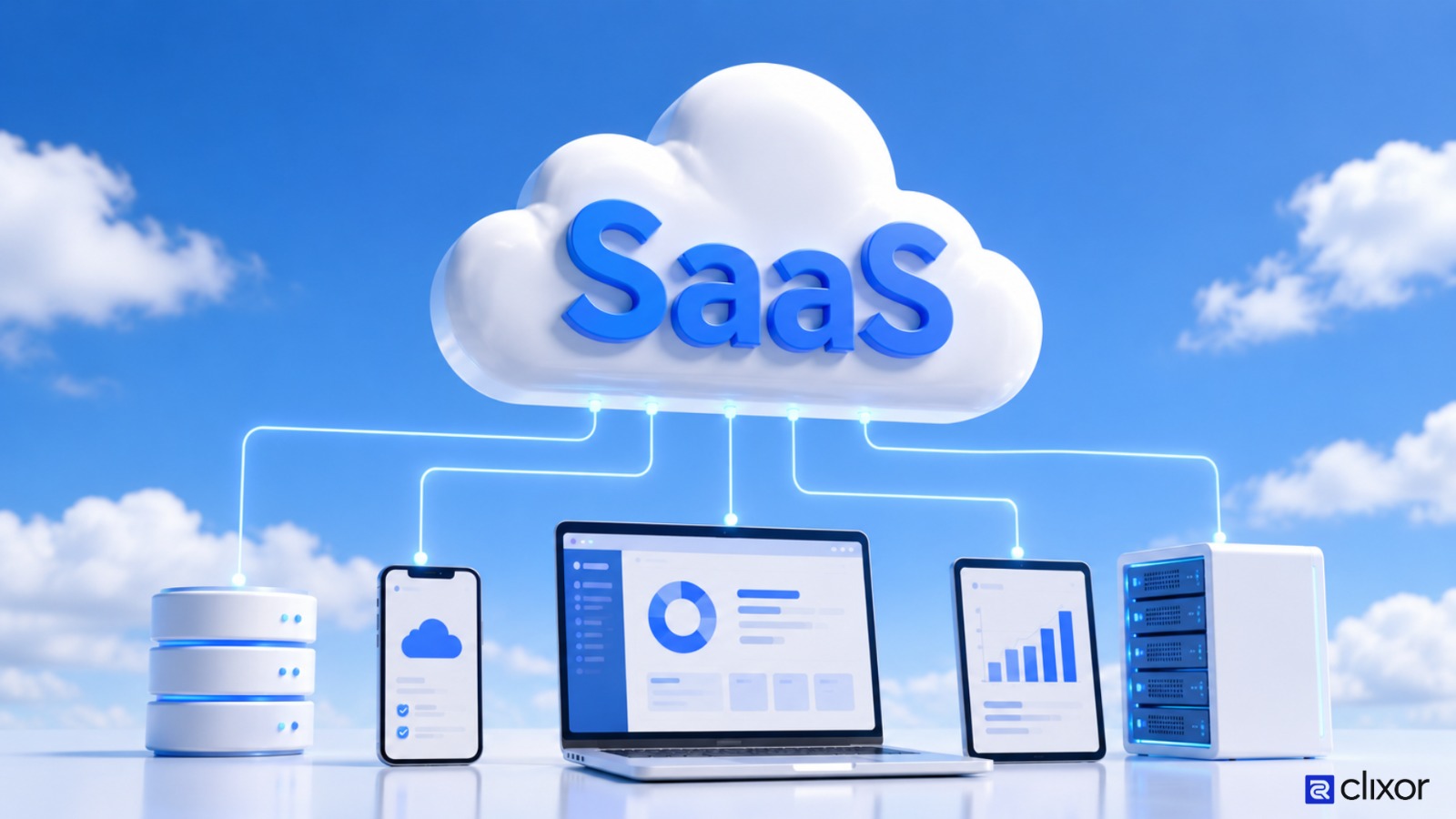
SaaS applications are typically hosted on cloud infrastructure. The provider manages the application, servers, databases, updates, and other technical components required to operate the service.
When a user logs in, the application connects to the cloud-based system. The platform processes the user's request and delivers the required information over the internet.
A simple way to understand the process is:
User → Internet → SaaS Application → Cloud Infrastructure → Data
Since the software is hosted centrally, users generally do not need to manage the underlying infrastructure.
Why Do Businesses Use SaaS?
One of the main reasons businesses choose SaaS is convenience.
Companies can access software without building or maintaining dedicated infrastructure for every application. SaaS also makes software deployment easier, especially when employees need access from different locations.
Another important benefit is scalability. As a business grows, it can often add users or adjust its subscription based on changing requirements.
SaaS can also reduce the burden of software maintenance because updates and infrastructure management are usually handled by the service provider.
Common SaaS applications are used for CRM, accounting, project management, communication, HR, marketing, file management, and business analytics.
SaaS vs Traditional Software
The main difference between SaaS and traditional software is how the software is delivered and maintained.
Traditional software is often installed locally and may require businesses to manage updates, infrastructure, and technical maintenance. SaaS applications are accessed through the internet, while much of the technical management is handled by the provider.
This makes SaaS a practical option for businesses that want flexible access to software without managing the underlying infrastructure themselves.
However, businesses should consider factors such as security, data privacy, integrations, pricing, scalability, backups, and vendor reliability before selecting a SaaS platform.
Is SaaS Right for Every Business?
SaaS can be a practical choice for many businesses, but the right solution depends on specific business requirements.
Companies should consider how the software will integrate with existing systems, how sensitive their data is, how many users require access, and whether the platform can support future growth.
Choosing software simply because it is cloud-based is not enough. The solution should address a genuine business need and fit effectively into existing workflows.
Conclusion
SaaS, or Software as a Service, provides businesses with a flexible way to access software through the internet without managing traditional software infrastructure.
Its ease of access, scalability, automatic updates, and reduced maintenance requirements have made SaaS an important part of modern business technology.
For businesses evaluating SaaS solutions, the focus should be on choosing software that is secure, scalable, reliable, and aligned with business needs.
Clixor Technologies helps businesses explore practical software and technology solutions that support efficient operations and long-term growth.